
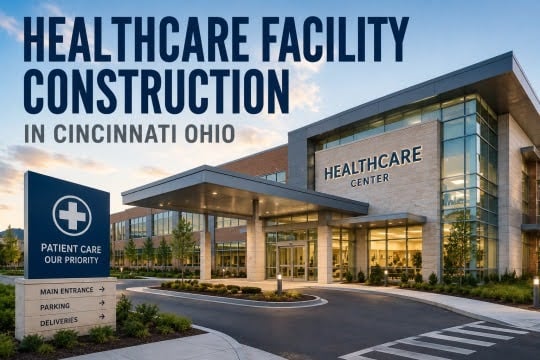
Healthcare facilities require far more than attractive buildings. Every medical office, outpatient clinic, surgical center, rehabilitation facility, and hospital must support patient safety, operational efficiency, regulatory compliance, and future growth. From specialized treatment rooms to advanced mechanical systems, every detail plays an important role in delivering quality healthcare services.
As Cincinnati’s healthcare industry continues to expand, construction projects must keep pace with evolving technology, changing patient expectations, and stricter building requirements. This guide explores the key considerations involved in healthcare facility construction and why experienced contractors are essential to successful medical projects.
Understanding the Unique Requirements of Healthcare Construction
Healthcare construction differs significantly from traditional commercial construction. Medical environments must accommodate specialized equipment, infection prevention measures, accessibility standards, and complex building systems.
Healthcare projects often include:
Medical office buildings
Outpatient clinics
Ambulatory surgery centers
Rehabilitation facilities
Diagnostic imaging centers
Specialty treatment facilities
Each type of facility requires careful planning to support both patient care and staff efficiency.
Prioritizing Patient Safety
Patient safety is one of the primary objectives of every healthcare construction project. Building layouts, materials, and mechanical systems are designed to create safe, clean, and comfortable environments.
Important considerations include:
Infection control measures
Slip resistant flooring
Proper ventilation
Emergency access
Fire protection systems
Accessible patient pathways
These features help protect patients, visitors, and healthcare professionals while supporting daily operations.
Designing Efficient Workflows
A well designed healthcare facility allows medical professionals to work efficiently while improving the patient experience.
Effective layouts often focus on:
Convenient patient flow
Efficient staff movement
Private consultation rooms
Comfortable waiting areas
Organized storage spaces
Easy equipment access
Thoughtful design reduces unnecessary movement and allows healthcare teams to focus more attention on patient care.
Meeting Building Codes and Healthcare Regulations
Healthcare facilities must comply with numerous local, state, and federal regulations throughout the construction process.
Project teams work to satisfy requirements involving:
Building codes
Fire safety standards
Accessibility regulations
Mechanical systems
Electrical systems
Plumbing standards
Working with experienced professionals helps ensure every phase of construction meets applicable regulations before the facility opens.
Integrating Advanced Medical Technology
Modern healthcare relies on sophisticated technology that must be incorporated into the building from the earliest planning stages.
Construction teams coordinate infrastructure for:
Diagnostic imaging equipment
Electronic medical record systems
Medical gas systems
Specialized electrical connections
Communication networks
Security systems
Planning these systems early helps avoid costly modifications later in the project.
Minimizing Disruptions During Renovations
Many healthcare projects involve renovating existing facilities that continue serving patients throughout construction.
Successful renovation planning includes:
Phased construction schedules
Temporary barriers
Dust control measures
Noise management
Safe pedestrian routes
Continuous communication with facility staff
Careful coordination allows healthcare providers to continue delivering essential services while improvements are completed.
Selecting Experienced Construction Professionals
Healthcare construction requires specialized knowledge that extends beyond general commercial building experience. Businesses and healthcare organizations searching for Commercial contractors Cincinnati should prioritize firms with experience managing complex medical construction projects.
Experienced healthcare contractors provide:
Comprehensive project planning
Regulatory knowledge
Quality control
Skilled project management
Reliable scheduling
Strong communication
Selecting the right contractor helps reduce risk while improving overall project outcomes.
Focusing on Long Term Performance
Healthcare facilities are long term investments that must remain functional for decades. Durable construction materials, energy efficient systems, and flexible building designs help support future expansion and changing healthcare needs.
Long term planning may include:
Adaptable treatment spaces
Expandable infrastructure
Energy efficient lighting
Sustainable building materials
Preventive maintenance planning
Designing with the future in mind helps healthcare organizations maximize the value of their investment.
Supporting the Community Through Quality Construction
Healthcare facilities serve an essential role within every community. Well constructed medical buildings improve access to healthcare services while creating comfortable environments for patients, visitors, and medical professionals.
By combining thoughtful planning, skilled construction, regulatory compliance, and modern technology, healthcare organizations can develop facilities that support high quality patient care for many years to come.
FAQs
What makes healthcare construction different from other commercial projects?
Healthcare facilities require specialized building systems, infection control measures, regulatory compliance, advanced technology integration, and patient centered designs that are not typically found in standard commercial buildings.
Why is experience important in healthcare construction?
Experienced contractors understand healthcare regulations, specialized building requirements, project coordination, and quality control procedures necessary for successful medical facilities.
Can healthcare facilities remain open during renovations?
Yes. Many renovation projects are completed in carefully planned phases that allow healthcare providers to continue serving patients while construction progresses.
What types of healthcare facilities require commercial construction?
Medical office buildings, outpatient clinics, hospitals, rehabilitation centers, imaging facilities, surgical centers, and specialty healthcare practices all require commercial construction expertise.
How long does healthcare construction typically take?
Project timelines depend on the size, complexity, permitting requirements, and scope of construction. Early planning and experienced project management help keep schedules on track.
Conclusion
Healthcare facility construction requires careful planning, technical expertise, and a commitment to quality at every stage of the project. From designing efficient patient spaces to integrating advanced medical technology and meeting strict regulatory standards, every decision contributes to the success of the completed facility. By partnering with experienced construction professionals, healthcare organizations in Cincinnati can create safe, efficient, and adaptable environments that support exceptional patient care while meeting the needs of their communities for years to come.