
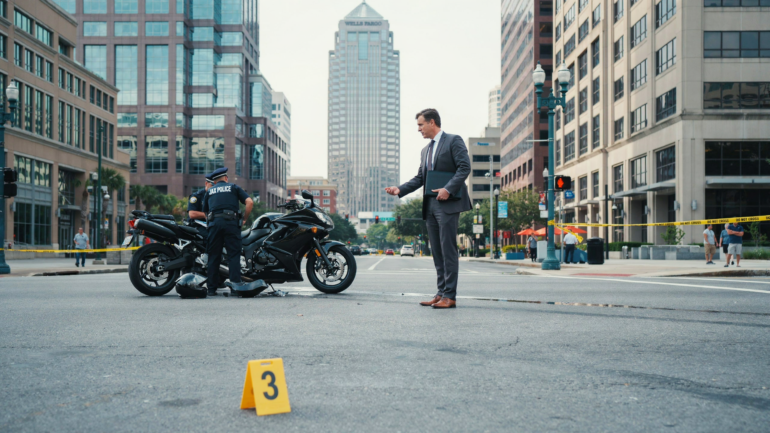
Motorcycle accidents on Jacksonville highways can be especially dangerous: riders lack a protective cabin, and high speeds shorten reaction time and intensify impact forces. Congestion, sudden lane changes, wet pavement, strong winds, and road debris can cause a rider to lose control or collide with another vehicle. Resulting injuries may include fractures, brain or spinal trauma, and internal harm. Knowing the risks, immediate safety steps, and ways to preserve evidence can help riders and families understand what may follow. The Jacksonville Motorcycle Accident Lawyer at Law Offices of Anidjar and Levine can explain available options.
Why Are Jacksonville Highway Motorcycle Crashes So Dangerous?
Jacksonville highway motorcycle crashes are especially dangerous because riders have little protection from collision forces. At highway speeds, even a brief loss of control can cause severe injuries. Unlike car occupants, motorcyclists lack a protective cabin, seat belts, and airbags, leaving their bodies exposed to the pavement and other vehicles.
Differences in vehicle weight intensify the danger. A passenger car or truck can overwhelm a motorcycle in a collision, while sudden braking or lane changes may leave a rider little room to respond. Traffic congestion, merging vehicles, and uneven road surfaces can further increase the risk.
Helmet visibility also matters. A helmet that is hard for drivers to notice, especially in poor light or heavy traffic, can make a rider less visible. Greater awareness from every road user helps prevent avoidable harm. Drivers who check blind spots, maintain safe distances, and yield appropriately can protect motorcyclists and support safer travel throughout Jacksonville.
What Should You Do After a Jacksonville Highway Crash?
After a Jacksonville highway crash, prioritize safety and medical care over questions about fault. A rider may be disoriented or seriously injured, so bystanders should act calmly, protect themselves from traffic, and offer help without moving anyone who may have a neck or back injury.
Prompt, considerate steps can support everyone affected and preserve useful information.
- Call emergency services. Report the location, hazards, and apparent injuries. Follow the dispatcher’s instructions, and avoid entering an unsafe roadway.
- Seek medical evaluation. Injuries may not be obvious immediately. The rider should accept emergency care and describe symptoms honestly to medical professionals.
- Document the scene. When safe, record vehicle positions, road conditions, visible damage, and contact details for witnesses. Do not interfere with responders or speculate about blame.
Those involved should exchange required information and, when appropriate, notify their insurer. Keeping records of treatment and communications can help clarify what happened. Compassionate assistance, paired with careful documentation, helps protect the rider’s well-being and supports a reliable account of the crash.
Why Does Speed Make Motorcycle Crashes Worse?
Speed increases impact force, making motorcycle crashes more likely to cause severe injuries. It also shortens the time riders have to react to sudden traffic changes or hazards on Jacksonville highways. These risks make safe speeds especially important for motorcyclists.
Greater Impact Force
At higher speeds, a motorcycle crash forces the rider’s body to absorb far more impact. Collision energy rises sharply with speed, leaving the rider less protection against severe injury. A crash can also cause extensive structural damage to vehicles and roadside barriers, showing how destructive that force can be.
- Greater bodily harm: Higher impact forces can cause fractures, head trauma, and internal injuries, even when protective gear is worn.
- More severe collisions: A motorcycle may strike another vehicle or fixed object with enough force to cause life-threatening consequences for everyone involved.
- Greater demands on responders: Serious crashes may require urgent medical care, expert rescue, and sustained support for injured riders and families.
Understanding these risks encourages safer choices and helps communities protect those traveling Jacksonville highways. Careful riding can reduce harm and spare families lasting hardship.
Reduced Reaction Time
The force of a high-speed motorcycle crash can be compounded by the brief time a rider has to respond to danger. At highway speeds, visual processing must happen quickly, leaving less time to recognize a stopped vehicle, debris, or a lane change. Effective hazard anticipation helps, but cannot eliminate the limits of human reaction. A few seconds can determine whether a rider brakes, swerves, or strikes an obstacle. Slowing down gives riders and nearby drivers more opportunity to respond and protect one another.
| Road event | Rider’s challenge | Safer response |
|---|---|---|
| Sudden braking | Limited stopping time | Increase following distance |
| Road debris | Rapid recognition required | Scan ahead |
| Lane change | Little room to maneuver | Maintain space |
| Congestion | Hazards emerge quickly | Reduce speed |
Which Jacksonville Highways Pose Risks to Riders?
Jacksonville’s busiest corridors can expose motorcyclists to sudden lane changes, heavy traffic, and limited escape routes.
Risks vary by location and conditions, but several major routes warrant particular attention:
- I-95: High speeds, dense commuter traffic, and closely spaced interchanges can leave riders with little time to respond to changing road conditions.
- I-295: This beltway’s long stretches, merging areas, and access points may combine fast-moving traffic with frequent changes in vehicle flow.
- I-10: Congestion near downtown and busy connections with other highways can create demanding conditions, especially during peak travel periods.
Surface hazards and visibility may also worsen on any route. Urban intersections near highway entrances can bring turning vehicles and crossing traffic into a rider’s path. Construction zones may narrow lanes, shift pavement, or reduce available space. For families and community members, recognizing these hazards supports safer travel choices and encourages drivers to watch carefully for motorcycles. Extra caution around these corridors can help protect every road user.
How Do Sudden Lane Changes Cause Motorcycle Crashes?
A driver who merges without checking their blind spot may force a nearby motorcyclist to make a sudden evasive move. With little time to react, the rider can lose control or collide with another vehicle. Careful mirror checks and deliberate lane changes can help prevent these crashes.
Blind-Spot Merges
When a driver changes lanes without checking a motorcycle’s blind spot, a routine merge can become a serious crash. On Jacksonville highways, motorcycles can disappear beside larger vehicles, even when riders follow traffic rules. A sudden merge may force a rider into another lane or cause a collision, putting everyone nearby at risk.
Safer lane changes depend on consistent habits:
- Check mirrors, then turn to look over your shoulder before moving.
- Maintain mirror positioning that reduces blind areas, while recognizing mirrors cannot show every vehicle.
- Signal early and wait until the lane is clearly open before merging.
These precautions support blind spot awareness and protect riders who may be difficult to see. Drivers who take an extra moment to verify space help prevent avoidable injuries and make shared roads safer for families, workers, and neighbors.
Limited Reaction Time
Because motorcycles can stop or change direction quickly, a sudden lane change by another driver may leave a rider with too little time to respond. At highway speeds, even a brief delay can close the space needed to brake or guide safely. Limited visibility around larger vehicles, combined with a driver’s failure to check mirrors or blind spots, can make a motorcycle difficult to detect before a move begins. These narrow decision windows may force riders to choose between braking hard, swerving into another lane, or striking the vehicle. Each option carries serious risks, including loss of control and collision with nearby traffic. Drivers who signal early, check carefully, and change lanes gradually give motorcyclists valuable time to react. Such attentive habits protect vulnerable road users and help prevent avoidable injuries on Jacksonville highways.
Why Do Tailgating and Traffic Jams Endanger Riders?
Why do tailgating and traffic jams pose such serious risks to motorcyclists on Jacksonville highways? A motorcycle offers little protection when a following driver leaves too little space or fails to notice slowing traffic. Rear end collision risks increase when a rider must brake suddenly and a vehicle behind cannot stop in time. Congestion adds another challenge: stop and go hazards can force repeated braking, leaving riders vulnerable to impacts and loss of balance.
Three common dangers warrant attention:
- Tailgating drivers reduce the distance available to react when traffic slows.
- Sudden stops in dense queues can catch riders between approaching and stopped vehicles.
- Drivers focused on surrounding cars may overlook a motorcycle filtering into view or waiting ahead.
Motorists can help protect riders by maintaining a generous following distance, watching for motorcycles, and braking gradually whenever possible. These simple choices can reduce preventable crashes and spare riders, families, and communities the lasting consequences of a highway collision.
How Do Weather and Road Hazards Cause Crashes?
Rain can reduce tire traction, while strong winds may destabilize a motorcycle and push it off course. Debris, potholes, and uneven pavement can also cause a sudden loss of control, especially for riders with little time to react. These hazards make cautious speeds and greater following distances necessary on Jacksonville highways.
Rain and Reduced Traction
Wet pavement can reduce a motorcycle’s grip and leave riders with less room to brake or steer around danger. In Jacksonville, sudden showers can make highway surfaces slick, especially where oil and grime collect. The hydroplaning risk rises when water pools, allowing tires to lose contact with the road. Reduced traction can turn routine actions into serious hazards:
- Braking hard may cause a wheel to lock or slide, increasing stopping distance.
- Leaning through a curve on slick pavement can make a motorcycle skid.
- Painted lane markings, metal plates, and standing water can offer less grip than surrounding asphalt.
Riders who slow down, increase following distance, and make gradual inputs can better protect themselves and nearby motorists. Drivers should also allow motorcycles space, recognizing that rain leaves riders fewer safe options when hazards appear.
Wind and Motorcycle Stability
Strong crosswinds can push a motorcycle off its line, leaving the rider less able to maintain balance or avoid nearby traffic. On Jacksonville highways, exposed bridges, open stretches, and passing trucks can create sudden gusts that demand quick corrections. Crosswind buffeting may unsettle a rider, while aerodynamic instability can make a motorcycle harder to control at speed. These forces can cause abrupt lane movement or reduce the time available to respond to surrounding vehicles. Riders may lower speed, maintain a steady grip, and increase following distance when conditions become gusty. Other motorists can help by allowing motorcycles extra space and avoiding sudden movements nearby. Recognizing wind as a serious stability risk encourages safer decisions and protects everyone sharing the road, especially riders with fewer safeguards in a collision.
Debris and Road Defects
Wind is not the only hazard that can unsettle a motorcycle on Jacksonville highways. Rain can conceal potholes, wash sand onto pavement, and leave slick patches where vehicles lose traction. At highway speed, even a small defect can force a sudden correction, threatening the rider and nearby motorists.
- Potholes: Pothole impacts can jolt a motorcycle, damage a wheel, or cause a rider to lose control before they can react.
- Loose gravel: Gravel near shoulders, work zones, or intersections can reduce tire grip, especially during braking or turning.
- Debris and standing water: Fallen cargo, branches, and pooled rainwater can obstruct a safe path or hide surface damage.
Drivers can help protect riders by maintaining distance, scanning the roadway, and reporting hazards promptly. Careful, attentive driving supports safer travel for everyone.
What Injuries Are Common in Jacksonville Motorcycle Crashes?
Motorcycle crashes on Jacksonville highways can cause severe injuries because riders have little protection from impact. Even with a helmet and protective clothing, a rider may suffer harm when struck by a vehicle or thrown onto pavement. The force of a high-speed collision can affect several parts of the body at once.
Traumatic brain injuries may result from a direct blow or violent movement of the head. They can impair memory, concentration, balance, or communication, and symptoms may not appear immediately. Spinal cord injuries can cause lasting weakness, loss of sensation, or paralysis, changing a person’s independence and daily life.
Fractures to the legs, arms, ribs, and pelvis are also common, as are road rash, deep cuts, and internal injuries. Some damage is not visible at the scene, making prompt medical evaluation important after a crash. Understanding the range of possible injuries helps families and communities respond with care and support for injured riders.
How Can You Preserve Evidence After a Motorcycle Crash?
Because injuries may emerge after a crash, preserving evidence can help clarify what happened while supporting later medical and insurance claims. Careful documentation also helps families and responders understand the event without relying solely on memory. Safety comes first: never let evidence gathering delay urgent medical care or put anyone near traffic.
- Photographing crash scene details can record vehicle positions, road conditions, debris, skid marks, signs, lighting, and visible damage. Images should be taken from several angles only when the area is safe.
- Save damaged clothing, helmets, and motorcycle parts. Preserving damaged gear in its post-crash condition may document impact and support later evaluations; avoid cleaning, repairing, or discarding items.
- Keep copies of medical records, discharge instructions, repair estimates, receipts, and written notes about symptoms and appointments. Record dates, locations, and names of witnesses, then store files securely.
Prompt, organized preservation can reduce stress during recovery and help those assisting the injured person provide accurate information to medical professionals and insurers.
Who May Be Liable for a Jacksonville Motorcycle Crash?
Determining liability after a Jacksonville motorcycle crash depends on the evidence and each party’s role in causing it. Driver negligence may include speeding, distracted driving, unsafe lane changes, or failure to yield. A motorcyclist may also share responsibility if the evidence shows a traffic violation contributed to the collision; Florida’s comparative fault rules can affect compensation.
Other parties may also be liable. A trucking company could face responsibility for a driver’s conduct or unsafe practices, while a vehicle manufacturer or repair shop may be accountable for a defective part or negligent work. Government liability may arise when a dangerous road condition, inadequate signage, or poor maintenance contributed to the crash, subject to special notice requirements and legal deadlines.
Because high-speed collisions can cause serious injuries, identifying every responsible party matters. Crash reports, photographs, witness accounts, and expert analysis can help clarify how the collision occurred. A careful investigation can support fair accountability and help injured people pursue recovery resources.
Jacksonville highway motorcycle crashes can change a rider’s life in seconds. High speeds, sudden lane changes, traffic, and road hazards may cause serious injuries and raise difficult questions about fault and compensation. Prompt medical care, careful evidence preservation, and a thorough crash review can help protect a rider’s interests. When injuries or liability are disputed, the Jacksonville Motorcycle Accident Lawyer at Law Offices of Anidjar and Levine may help families understand their options and pursue accountability.