
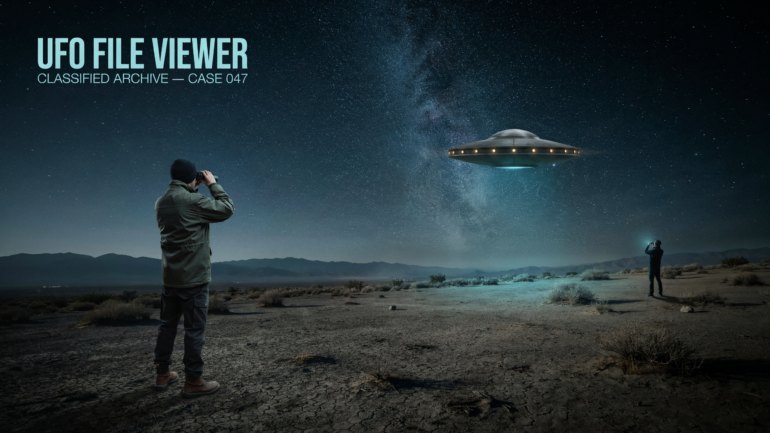
The UFO File Viewer makes historical UFO reports easier to locate, compare, and cite across government files, newspapers, and firsthand accounts. Its searchable records can reveal material that once required visits to multiple collections, though coverage remains uneven. Researchers should check digitized images against catalog details, preserve dates and provenance, and distinguish reported observations from later interpretations. Comparing independent sources can clarify what a record supports—and what remains uncertain.
Where to Find Digitized UFO Sightings
You can find digitized UFO sightings most readily in institutional archives, government collections, and curated historical databases. National repositories may preserve declassified reports, correspondence, and investigation files, while university libraries and local historical societies hold newspapers, manuscripts, and regional records. Their holdings differ in scope, date range, and access conditions, so researchers should consult collection descriptions before drawing conclusions.
Specialized UFO archive directories can identify relevant collections across institutions and independent projects. Historical sighting indexes organize reports by date, location, witness, or source, helping researchers trace an event to its documentary context. Catalog entries and finding aids can clarify whether a record is an original document, a later transcription, or a secondary account.
Useful collections also appear in digitized newspaper databases, oral-history repositories, and public-record portals. Each source has distinct strengths and limitations: newspaper coverage reflects editorial choices, and official files may be incomplete. Careful citation of repository names, file identifiers, and publication details supports verification and enables others to examine the same evidence responsibly.
How Digital Archives Make UFO Research Easier
By bringing dispersed records into searchable interfaces, digital archives make historical UFO research faster and more systematic. Researchers can compare newspaper accounts, photographs, correspondence, and catalog descriptions without repeatedly traveling to separate collections. Search tools also help identify recurring dates, locations, terminology, and reporting patterns across large bodies of material.
Archive accessibility broadens participation beyond experts with access to major libraries. Teachers, local historians, students, and community groups can examine primary sources and contribute contextual knowledge, while clear citations support responsible use. Digitization does not resolve uncertain claims: scans may omit pages, metadata may be incomplete, and optical character recognition can misread names or dates. Researchers consequently need to verify search results against original images and record collection details.
Shared catalogs and stable links can strengthen research collaboration by allowing teams to compare findings, document disagreements, and avoid duplicating work. When archives describe provenance and digitization limits, they help readers assess evidence rather than treat online availability as proof. Digital tools improve access and methods, but careful interpretation remains vital.
Search Government UFO Records Online
You can search government UFO records through online catalogs and agency archives, but their scope and organization vary. Government portals may include declassified reports, correspondence, photographs, and administrative files, often indexed by date, office, or subject. Their contents reflect each agency’s responsibilities, not a complete record of every reported sighting. For example, military files may document investigations into aerial observations, while intelligence collections may address security concerns rather than identify objects.
Researchers can start with agency search tools and national archival catalogs, then note file titles, dates, and reference numbers to verify them. Digitization is uneven: some records are searchable full text, while others appear only as scanned pages or catalog descriptions. When relevant documents are not online, FOIA requests may seek access to records held by federal agencies, subject to exemptions, review delays, and redactions. Comparing released files with catalog entries helps clarify what is documented and what remains unavailable. Careful citation and neutral interpretation help readers use the findings without overstating the evidence.
Explore Newspaper Archives for UFO Reports
Digitized newspaper archives can reveal contemporary reports of unidentified aerial phenomena that may not appear in official records. Comparing regional accounts helps establish how sightings were described and circulated across different communities. Researchers should verify each report against the original newspaper page, since later summaries may omit context or alter details.
Search Digitized Newspapers
Newspaper archives let researchers trace how reports of unidentified flying objects entered public discourse. Digitized collections let researchers search decades of local coverage without handling fragile originals. Newspaper OCR converts scanned pages into searchable text, though faded ink, unusual fonts, and column layouts can produce errors. Archive indexing adds dates, titles, and publication details, helping users locate relevant issues and verify each result against the page image.
- A search for “flying saucer” may reveal a brief item beside weather notices or advertisements.
- A date filter can narrow thousands of pages to the weeks following a reported sighting.
- Opening the scan allows readers to inspect wording, placement, and surrounding context.
Careful checking distinguishes contemporary reporting from later recollection and supports accurate, accessible historical research for communities and public-interest projects.
Compare Regional Accounts
Comparing regional newspaper accounts can show how different communities described, interpreted, and circulated a reported sighting. Researchers can compare dates, locations, witness descriptions, headlines, and the prominence given to each report. Similar wording across nearby papers may indicate shared news distribution, while distinct details can reflect local observation or editorial choices. Differences in tone may reveal how communities weighed aviation, weather, military activity, or unexplained causes. Regional folklore and local traditions may also shape the language used to frame unusual lights or objects, offering context for public interpretation without establishing what observers saw. Mapping reports across regions can reveal clusters, gaps, and changing patterns of attention. Such comparisons help researchers serve readers responsibly by distinguishing documented reporting from later retellings and by presenting community perspectives with care and historical context.
Verify Original Reports
Regional comparisons can identify patterns, but researchers should check each claim against its earliest available source. Newspaper archives can reveal how a sighting was first reported, before later retellings altered details. Researchers should record publication dates, page numbers, bylines, and the wording of each account. These details establish archival provenance and support document authentication, while distinguishing contemporary evidence from retrospective interpretation.
- A scanned front page places a report beside the day’s local headlines, grounding it in its historical setting.
- A close view of the article exposes the reporter’s exact language, named witnesses, and stated uncertainties.
- A comparison with another edition may reveal corrections, syndicated text, or differences introduced during republication.
Such checks do not prove an object’s identity. They help readers assess what witnesses and editors actually recorded, preserve reliable citations, and share findings responsibly with others.
Find Firsthand Accounts in Digital Collections
Digitized archives can preserve letters, diaries, oral histories, and official records that offer firsthand accounts of reported UFO sightings. Researchers should assess each source’s date, provenance, and context before treating its claims as evidence. Comparing testimonies can reveal shared details as well as discrepancies shaped by memory and circumstance.
Search Digitized Archives
Where can researchers find firsthand accounts of historical UFO sightings? Digitized newspaper collections, government repositories, local-history portals, and university archives provide searchable routes to contemporary records. A disciplined archive search begins with dates, locations, and period terms, while catalog navigation reveals formats, provenance, and access limits. Such records document what witnesses reported and what institutions preserved; they do not, by themselves, establish an explanation.
- A researcher scans a 1947 newspaper page, where a brief “flying saucer” notice sits beside weather reports and advertisements.
- A library catalog leads to a county scrapbook, its indexed clipping linked to a town and publication date.
- A government repository opens a scanned memorandum, showing its author, filing context, and classification history.
Careful citation enables volunteers, educators, and local historians to preserve these sources responsibly and make them accessible to future inquiry.
Compare Firsthand Testimonies
Comparing firsthand testimony requires separating what witnesses directly reported from details added through later retellings. Digital collections let researchers place interviews, letters, newspaper accounts, and official records side by side, while preserving dates and provenance. This comparison supports careful service to communities whose experiences merit accurate representation.
| Evidence | Analytical use |
|---|---|
| Original interview | Identifies direct observations |
| Contemporary letter | Establishes timing and wording |
| Later recollection | Reveals memory changes |
| Independent account | Tests shared details |
Witness credibility should not rest on occupation or reputation alone; researchers assess opportunity to observe, recording conditions, and possible influence. Testimony consistency across independent sources may strengthen a detail, but agreement does not prove an explanation. Differences can reflect perspective, memory, or transcription. Digital access makes these limits easier to examine, helping readers distinguish documented claims from interpretation and treat witnesses fairly.
Compare Cases in UFO Databases
Digital UFO databases make it possible to compare reports across periods, regions, and sources, but their records vary in detail and reliability. Researchers can examine how each case was documented, which witnesses or agencies contributed information, and whether later revisions altered the original account. Case classification helps organize reports by features such as shape, duration, and observer context, yet categories may reflect different standards. Database interoperability matters because compatible records allow comparisons without erasing distinctions in terminology or provenance. Responsible analysis keeps those limits visible, especially when findings may inform public understanding or support people seeking reliable answers.
A careful comparison can follow three checks:
- A 1940s newspaper clipping sits beside a later catalog entry, revealing missing details and changes in wording.
- Two records describe similar lights, but their witness counts and source citations differ.
- A case marked “unknown” remains separate from one assigned a speculative explanation.
Such checks distinguish documented similarities from assumptions and preserve the historical record for future researchers and readers.
Map UFO Sightings by Place and Date
Mapping UFO reports by place and date can reveal patterns in where and when sightings were recorded, while also exposing gaps in the historical record. Interactive sighting maps allow researchers to locate reports alongside geographic boundaries, population centers, and known observation sites. Such context can clarify whether clusters reflect repeated local attention, changes in reporting access, or the uneven preservation of older records.
Chronological location filters help narrow results to a particular period and area, making it easier to compare cases without treating every entry as equally documented. A map may show where reports were filed, but not necessarily where an event occurred; records can also contain approximate dates, inconsistent place names, or missing coordinates. Responsible interpretation consequently depends on checking map points against original accounts and database notes. Clear legends, source links, and uncertainty markers make these tools more useful to historians and the public, including people seeking to understand how evidence was collected and where further archival work may support informed discussion.
Track UFO Reports Across Time
Tracking UFO reports across time can show how sighting patterns and record-keeping changed across different periods. Digital archives let researchers align historical timelines, compare reporting volumes, and note shifts in terminology without treating those changes as proof of changing phenomena. Such comparisons can help communities understand how public attention, communication systems, and reporting procedures shaped the surviving record.
- Early decades: A small cluster of newspaper accounts may appear beside handwritten notes, reflecting limited channels for documenting and sharing observations.
- Postwar years: Reports may rise alongside wider aviation activity and expanding news coverage, creating visible sighting trends that require historical context.
- Digital era: Online forms and searchable databases can produce denser records, while standardized fields make year-to-year patterns easier to chart.
A timeline can also reveal gaps caused by missing files, inconsistent cataloging, or uneven access to local records. Researchers serving the public benefit from describing these limits clearly. Long-term comparisons offer context for discussion and help readers distinguish changes in documentation from changes in reported experiences.
Check Each Record’s Evidence
Because historical UFO records vary in origin and detail, each report should be assessed against its underlying evidence. Digitized collections can make comparison easier, but a scan is only an access point, not proof of a record’s completeness or reliability. Researchers should note where an item was held, who created or collected it, when it entered an archive, and whether the digital copy preserves its original context. This Evidence provenance helps explain gaps, later annotations, or differences among versions. Document authenticity also requires attention to paper, type, handwriting, stamps, dates, and signs of alteration, alongside catalog descriptions and archival notes. Where possible, records should be compared with contemporaneous newspapers, official files, correspondence, photographs, or other independent materials. Such checks do not settle every uncertainty; they establish what survives and how it can be examined. Careful documentation of limitations allows future researchers and interested communities to revisit the record responsibly, preserve its historical context, and avoid treating incomplete files as definitive.
Tell Witness Claims From Verified Facts
Once a historical record’s provenance and condition are assessed, its contents must be separated into witness statements, contemporary interpretations, and independently verified facts. This claim classification helps readers honor a witness without treating every reported detail as established. Eyewitness memory can preserve striking impressions, yet recollection may shift with time, discussion, or later explanations. Researchers as a result distinguish what a person said from what instruments, documents, or independent observers corroborated.
Classify witness statements, contemporary interpretations, and verified facts separately, preserving testimony without treating every reported detail as established.
A useful reading practice marks each layer clearly:
- A aviator’s description of a luminous object is a reported observation, not proof of its origin.
- A newspaper’s label, such as “flying saucer,” reflects contemporary interpretation and vocabulary.
- A radar log, weather record, or separate dated account may support specific details, while leaving other questions unresolved.
Such distinctions serve witnesses and the public alike: they preserve testimony accurately, prevent speculation from hardening into fact, and make historical comparisons more dependable. Digital collections can present these categories side by side, allowing readers to assess evidence while retaining uncertainty where the record does not settle it.
Spot Gaps and Bias in Digital Archives
Digital archives preserve only part of the historical record, as documents may be lost, withheld, or never digitized. Their geographic coverage is also uneven, often favoring regions with stronger institutions and record-keeping systems. These gaps and source imbalances can shape which UFO reports appear visible to researchers.
Missing Records
Which UFO reports appear in digital archives often reflects not only historical activity but also what agencies preserved, declassified, and later digitized. Record preservation depended on administrative priorities, changing formats, and access rules; archival omissions consequently cannot be treated as evidence that an event was unreported. Researchers serving the public benefit from distinguishing a missing file from a disproven claim and from documenting uncertainty.
- A catalog may list a case while its original witness statement remains unavailable.
- A scanned folder may omit attachments once filed separately or withheld during review.
- A newspaper account may survive where an agency report was lost, restricted, or never transferred.
Comparing indexes, finding aids, and surviving copies can reveal how records were assembled and where evidence breaks off. Careful description of such gaps supports transparent research without overstating conclusions or diminishing witnesses.
Geographic Blind Spots
Across digital UFO archives, geographic coverage is uneven: regions with well-funded agencies, active reporting networks, or records that were readily digitized may appear more prominent than others. This imbalance can distort historical comparisons, making some locations seem unusually active while others remain difficult to assess. Rural reporting may be underrepresented when witnesses had limited access to newspapers, investigators, or formal reporting channels. Maritime sightings present another challenge: accounts from ships and coastal communities may be scattered across logs, local publications, and agency files, leaving broad areas thinly mapped. Researchers should consequently treat archive density as a measure of preservation and access, not necessarily of incident frequency. Mapping known gaps, noting uncertain locations, and seeking regional partners can make investigations more inclusive and help communities contribute overlooked local knowledge to the historical record.
Uneven Source Coverage
Geographic gaps often reflect a broader problem: digital UFO archives draw on sources preserved and catalogued unevenly. A searchable collection may appear thorough while excluding records that were never digitized, were poorly described, or remain inaccessible. Uneven digitization priorities and archival funding disparities shape which accounts become visible, influencing comparisons across regions, decades, and institutions. These absences matter because researchers and public-service organizations rely on balanced evidence when interpreting historical claims.
- A county newspaper’s clipped reports may sit uncatalogued in a local library, while a major city’s coverage is indexed online.
- Government files may be scanned, but handwritten annotations, attachments, or restricted pages can remain missing.
- Oral histories may survive in community collections without transcripts, leaving witnesses’ accounts difficult to search.
Mapping such gaps helps researchers distinguish absence of evidence from evidence of absence and directs preservation efforts toward overlooked records.
Keep Context When Sharing UFO Records
When historical UFO records circulate online, preserving their original context is essential to interpreting them accurately. A newspaper report, military memo, or witness letter reflects the language, institutions, and expectations of its time. Removing those details can make uncertainty appear like confirmation or turn a tentative observation into a definitive claim. Context preservation consequently requires sharing the record’s date, creator, publication or agency, and surrounding circumstances alongside any excerpt.
Citation consistency also helps readers trace claims to the same source and distinguish original documents from later retellings. Researchers should identify omissions, edits, and disputed attributions rather than silently smoothing them over. When accounts conflict, the disagreement itself is historically relevant; it may reflect different vantage points, reporting delays, or changing descriptions. Careful framing does not dismiss witnesses or endorse a particular explanation. It allows readers, including those seeking to support informed public discussion, to assess what the evidence establishes and where interpretation begins. Such restraint keeps historical records useful without overstating their meaning.
Preserve UFO Accounts With Digital Tools
Digital tools can preserve historical UFO accounts by capturing both the records and the information needed to interpret them. Scanned reports, photographs, and correspondence can be stored alongside clear descriptions of their origins, dates, and custodians. Metadata standards make these collections searchable and help future researchers understand how each item was created and maintained.
Oral history preservation adds voices that paper files may omit. Recorded interviews can preserve a witness’s phrasing, pauses, and recollections, while transcripts support access for people who can’t listen. Consent records and preservation copies protect participants and the archive’s reliability.
Recorded interviews preserve witnesses’ voices and recollections, while transcripts and consent records support access and responsible archiving.
A carefully organized digital collection can bring distant evidence into view:
- A dated newspaper clipping appears beside its catalog entry.
- An interview waveform sits with a transcript and consent note.
- A handwritten sighting report is preserved as a high-resolution image.
Consistent formats, backups, and documented stewardship reduce the risk of loss. These practices help libraries, local groups, and families serve the public by keeping accounts legible, accessible, and responsibly preserved.
Verify Online Findings With Original Sources
Trace online accounts of historical UFO sightings to the archives and collections from which they originate. Comparing original reports, correspondence, and official records can reveal how later retellings altered or omitted details. Such checks distinguish documented evidence from unsupported interpretation.
Trace Claims to Archives
Trace claims about historical UFO sightings found online to their earliest available records, such as newspaper reports, military files, or contemporaneous correspondence. Researchers can establish archival provenance by tracing citations backward from websites, books, and databases to the repositories that hold the underlying documents. Citation standards should identify collection names, file numbers, dates, and page references, enabling other readers to locate evidence and assess its context.
A disciplined search may lead through:
- A digitized newspaper clipping to the issue, page, and publication archive.
- A catalog entry to a military report’s box, folder, and record group.
- A quoted letter to its dated manuscript, sender, and repository.
Such tracing supports responsible public inquiry: it separates documented transmission from unsupported repetition and gives future researchers, educators, and community members a dependable route to the historical record.
Compare Original Records
Once a historical UFO report has been traced to its earliest available record, check its details against the original source rather than accepting summaries or transcriptions. Researchers can compare dates, names, wording, and annotations with scanned newspapers, agency files, correspondence, or contemporaneous logs. Differences may reflect later editing, transcription errors, or changes in terminology, not necessarily deception. Attention to archival provenance helps establish who created a document, when it entered a collection, and whether its context has been preserved. Document authentication also requires examining physical or digital features, including letterhead, signatures, page sequence, and catalog information. When researchers cannot access originals, they should note the limitation and distinguish verified facts from reported claims. Such careful comparison supports accurate public accounts and helps others assess evidence without overstating what the record demonstrates.
Combine Records to Check UFO History
Combining newspaper archives, military records, weather data, and witness accounts can help researchers assess historical UFO reports against the conditions in which they occurred. An archival chronology can show when claims emerged, while case cross-referencing reveals whether independent sources describe the same event or repeat an earlier account. Researchers can then test explanations against documented circumstances rather than treating every report in isolation.
- A dated newspaper clipping may place a sighting above a town square; weather logs can establish whether cloud cover or a storm obscured the sky.
- Military flight records may show aircraft operating nearby, while radar summaries can indicate whether an object was tracked or absent from available instruments.
- Witness statements, when compared for timing and vantage point, can distinguish shared observations from details added in later retellings.
Such comparisons do not automatically identify an object. They clarify what the record supports, what remains uncertain, and which gaps require further study. Careful synthesis helps preserve public history and gives communities a fair, evidence-based account of reported events.
The UFO File Viewer makes historical UFO reports easier to locate, compare, and preserve, but access does not guarantee accuracy. Government files, newspaper accounts, and firsthand testimony each reflect different purposes, limits, and historical contexts. Researchers can assess claims more reliably by tracing records to original sources, distinguishing observation from interpretation, and comparing independent accounts. Used carefully, digital tools broaden inquiry without resolving every case. The UFO File Viewer helps make evidence more accessible while keeping uncertainty, provenance, and context visible.