
We have all seen the evolution of the “cool office.” First, it was the cubicle farm, a sea of grey fabric and fluorescent hum. Then came the open plan revolution, which promised collaboration but mostly delivered noise and distractions. Finally, the tech giants introduced the “adult playground” era—ping pong tables, beer taps, and bean bag chairs. But the novelty of a foosball table wears off pretty quickly when you are burnt out.
As we navigate the modern workforce, the definition of a desirable workplace has shifted. Employees aren’t looking for toys; they are looking for sanity. They want spaces that support their mental health and offer a reprieve from the digital grind.
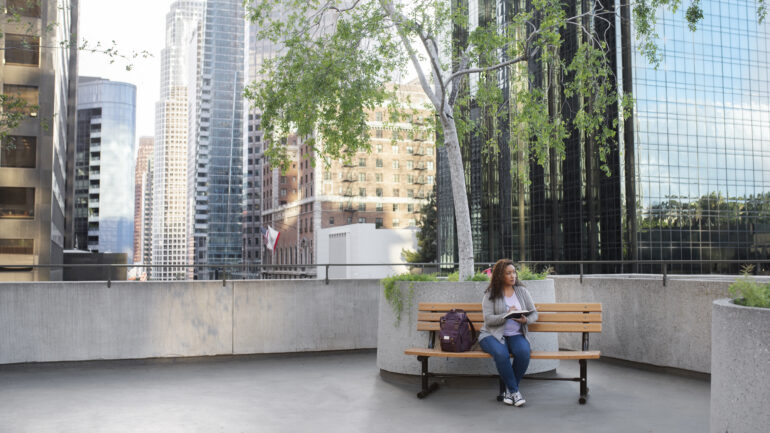
This is where forward-thinking companies are looking up—literally. Converting a grey, industrial slab into a vibrant, living rooftop garden is no longer just an aesthetic choice for luxury hotels. It is becoming a strategic retention tool for corporate offices. In a labor market where top talent can work from anywhere, giving them a reason to want to be here is the ultimate competitive advantage.
Here is why swapping concrete for clover might be the best HR decision you make this year.
1. The Science of De-Stressing
There is a biological reason why we feel better when we walk through a park. It’s called “biophilia”—the innate human tendency to seek connections with nature.
For an office worker, the day is often a series of high-stress spikes: a difficult client call, a looming deadline, a tech failure. When you trap that stress inside a sealed glass box with recycled air, it compounds. Cortisol levels rise, and eventually, that employee burns out and quits.
A rooftop garden acts as a pressure release valve. Access to green space, natural light, and fresh air has been clinically proven to lower heart rates and reduce stress hormones. When an employee can step away from their screen, take the elevator up, and spend ten minutes surrounded by plants and open sky, they undergo a physiological reset. They return to their desk calmer and more focused. By providing this on-site sanctuary, you are actively helping them manage the stress of the job, making it far less likely they will look for an escape route to a competitor.
2. The Death of the Break Room
Let’s be honest: the traditional office break room is depressing. It’s usually a windowless room with a humming refrigerator, the smell of microwaved fish, and a few plastic chairs. Nobody wants to linger there. It’s a place to grab coffee and flee.
This lack of a communal space kills culture. A rooftop garden transforms the social dynamic of a building. It becomes a destination.
- The Cross-Pollination Effect: In the garden, the accounting team bumps into the creative team. The CEO eats lunch on a bench next to the intern. The rigid hierarchy of the office floor dissolves in the open air.
- Friendship Retention: Data consistently shows that employees who have a close friend at work are significantly more likely to stay long-term. These friendships don’t happen in Zoom meetings; they happen in organic, relaxed spaces where people can talk about life, not just KPIs.
3. A Visual Signal of Value
Retention is often about perception. Employees want to feel that their employer cares about them as human beings, not just as units of production.
When a company invests in a rooftop garden, it sends a powerful, non-verbal message: We value your well-being enough to build this for you. It signals that the company is stable, forward-thinking, and generous.
- The Recruitment Wow Factor: Imagine walking a prospective hire through the office. You show them the desks, the conference rooms, and the lobby. It’s fine, but it looks like every other office. Then, you take them to the roof. The doors open to a lush, landscaped terrace with a view of the city skyline.
- The Result: That is the moment they sign the offer letter. People want to work in places they are proud to show off. If your office is a place they want to post on Instagram, they are going to think twice before leaving it for a dull cubicle down the street.
4. The Fresh Air Productivity Boost
The “3:00 pm slump” is the enemy of productivity. In a typical office, carbon dioxide levels rise throughout the day as people breathe in a sealed environment. High CO2 levels lead to drowsiness, headaches, and brain fog.
The typical solution is another cup of coffee. The better solution is oxygen. Encouraging employees to take their laptops to the roof for an hour, or to hold a standing meeting in the garden, changes the metabolic pace of the day.
Natural light regulates the circadian rhythm, leading to better sleep at night. Fresh air wakes up the brain. When employees feel physically better—more alert, less headache-prone, more energized—they associate that feeling with the workplace. They don’t dread coming in on Monday morning because the environment itself isn’t draining them.
5. Facilitating the Hybrid Compromise
The biggest friction point in the corporate world right now is the return-to-office mandate. Employees got used to working from their patios and backyards during the pandemic. Being forced back into a fluorescent box feels like a downgrade.
A rooftop garden bridges this gap. It offers the “work from anywhere” vibe while still being at the office.
- The Outdoor Office: With decent Wi-Fi and some shaded seating, the roof becomes a functional workspace.
- The Compromise: An employee might be resistant to coming in five days a week, but if they know they can spend their afternoons answering emails surrounded by greenery and sunshine, the commute feels much less like a punishment. It softens the blow of the RTO policy, preserving morale and preventing a mass exodus of staff who refuse to give up their outdoor access.
An Investment for Your Employees
We spend one-third of our lives at work. For too long, we accepted that “work” meant being cut off from the outside world, staring at drywall under artificial lights. That era is ending. The companies that will win the war for talent are the ones that recognize that humans are biological creatures who need sunlight, air, and nature to thrive.
Adding a rooftop garden isn’t just a landscaping expense; it is an investment in your human capital. It turns your building into a place where people actually want to be. And when people want to be there, they stay.