
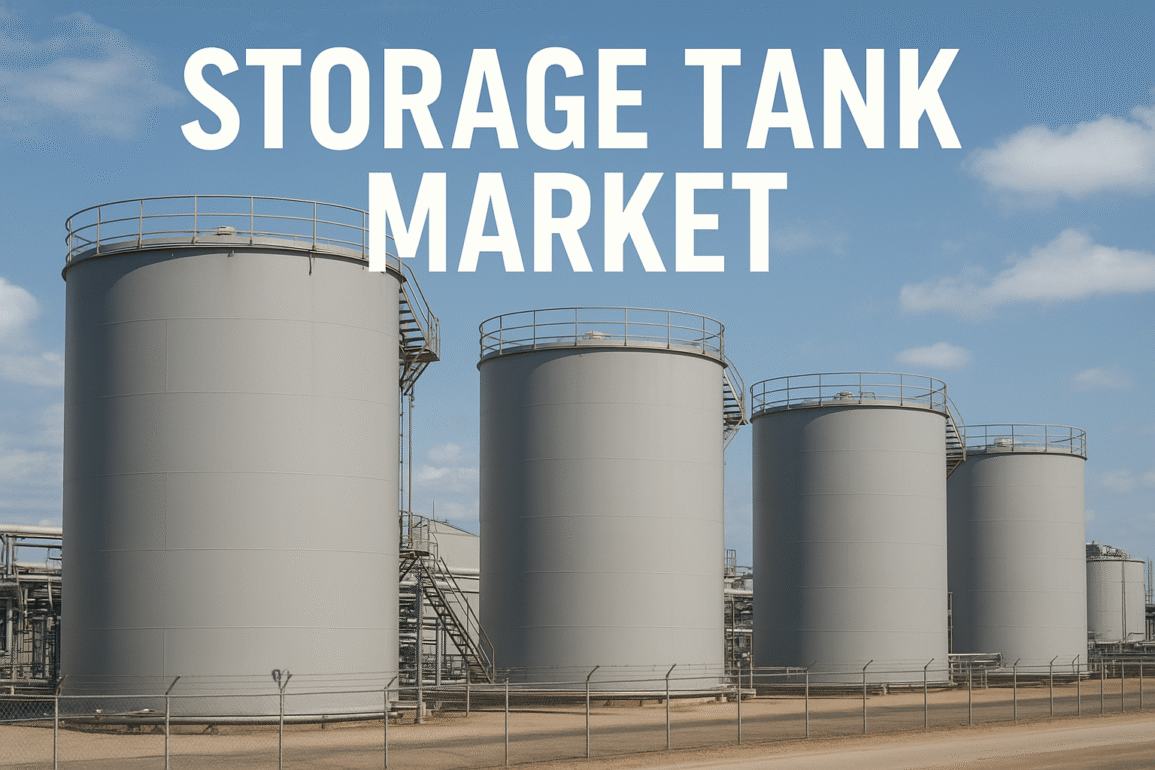
The storage tank industry is witnessing robust growth due to the increasing demand for industrial storage solutions across multiple sectors. Storage tanks are essential for storing liquids, gases, chemicals, and petroleum products safely and efficiently. Industries such as oil & gas, chemical, water treatment, and food & beverages are increasingly relying on advanced storage tank systems for operational efficiency, safety, and compliance with environmental regulations.
The Storage Tank Market size was valued at USD 26.05 billion in 2024 and is projected to reach USD 44.82 billion by 2032, growing at a CAGR of 7.02% during the forecast period of 2025-2032. This growth is driven by increasing industrialization, urbanization, and the rising need for efficient storage solutions in developing economies.
Key Drivers Fueling Storage Tank Demand
- Expansion of Oil & Gas and Chemical Industries
The oil & gas sector continues to be a major contributor to storage tank demand. Refining, petrochemical processing, and fuel storage require reliable storage tanks. Similarly, the chemical industry needs specialized storage tanks capable of handling corrosive and volatile substances. - Rising Water Treatment and Municipal Infrastructure Projects
With increasing population and urbanization, municipalities are investing heavily in water storage and wastewater treatment facilities. Large-capacity water storage tanks are becoming integral to these projects, further boosting the market growth. - Technological Advancements in Storage Solutions
Innovations such as double-walled tanks, modular tanks, and corrosion-resistant materials enhance safety and efficiency. Automated monitoring systems and IoT-enabled tanks are increasingly adopted to ensure real-time monitoring of liquid levels, pressure, and temperature, improving operational efficiency. - Demand in Food & Beverage Sector
The food and beverage industry requires hygienic and corrosion-resistant storage tanks for liquids such as milk, juice, and edible oils. Stainless steel and polymer-coated tanks are particularly popular due to their durability and compliance with safety standards.
Segmentation Insights
The storage tank industry is highly diverse, with solutions tailored for specific requirements:
- By Material: Steel, Stainless Steel, Aluminum, Polyethylene, Fiberglass
Steel and stainless steel tanks dominate due to their durability and ability to store industrial liquids safely. Fiberglass and polyethylene tanks are preferred for cost-effective and lightweight storage needs. - By Type: Vertical, Horizontal, Underground, Modular
Vertical and horizontal tanks are widely used in industrial applications. Underground storage tanks are preferred for fuel storage due to environmental compliance. Modular tanks offer flexibility and ease of installation in temporary storage projects. - By End-Use Industry: Oil & Gas, Chemicals, Water Treatment, Food & Beverage, Pharmaceuticals, Others
Oil & gas and chemical sectors continue to dominate in terms of revenue share. However, water treatment and pharmaceutical applications are gaining traction due to regulatory requirements and growing infrastructure projects.
Regional Outlook
- North America
North America remains a key market due to stringent regulations for fuel and chemical storage. The U.S. and Canada are adopting advanced storage solutions, including automated and IoT-enabled tanks. - Europe
Europe shows steady growth, driven by environmental regulations and renewable energy projects. Countries like Germany, France, and the UK are investing in water storage and chemical processing infrastructure. - Asia-Pacific
The Asia-Pacific region is expected to witness the highest growth during the forecast period. Rapid industrialization, urbanization, and increasing oil & gas and chemical production in China, India, and Southeast Asia are driving market demand. - Middle East & Africa
The Middle East, with its significant oil reserves, continues to require large-scale storage tanks. Investments in refining and petrochemical sectors are also boosting the market. - Latin America
Latin America is witnessing moderate growth with increasing infrastructure projects and industrial expansion in countries like Brazil and Mexico.
Challenges in the Storage Tank Industry
While the market growth is promising, certain challenges exist:
- High Initial Investment: Advanced storage tanks with automation and monitoring systems require significant capital.
- Corrosion & Maintenance Issues: Improper maintenance can lead to corrosion, leakage, and operational hazards.
- Regulatory Compliance: Strict environmental and safety regulations can increase operational costs and complicate installation processes.
Despite these challenges, the market outlook remains strong due to the ongoing demand across multiple industries and continuous technological advancements.
Future Trends
- Smart and IoT-Enabled Tanks: Real-time monitoring of liquid levels, pressure, and temperature.
- Eco-Friendly Materials: Increased adoption of sustainable materials to reduce environmental impact.
- Modular and Portable Solutions: Growing need for flexible storage in emerging markets.
- Integration with Renewable Energy Projects: Storage tanks for biofuels and other renewable energy liquids.
Conclusion
The storage tank industry is poised for strong growth from USD 26.05 billion in 2024 to USD 44.82 billion by 2032 at a CAGR of 7.02%. Rising industrialization, technological advancements, and increasing infrastructure projects are the key drivers. While challenges such as high costs and regulatory compliance exist, innovation in materials, smart monitoring, and modular designs provide significant opportunities. The Asia-Pacific region is expected to be the fastest-growing market, supported by industrial expansion and urbanization.
FAQs
- What is the CAGR of the storage tank industry?
The storage tank industry is projected to grow at a CAGR of 7.02% between 2025 and 2032. - What is the forecast for the storage tank market by 2032?
The market is expected to reach USD 44.82 billion by 2032, up from USD 26.05 billion in 2024.
3. Which regions are expected to drive growth?
Asia-Pacific is anticipated to witness the fastest growth, while North America and Europe maintain steady expansion.