
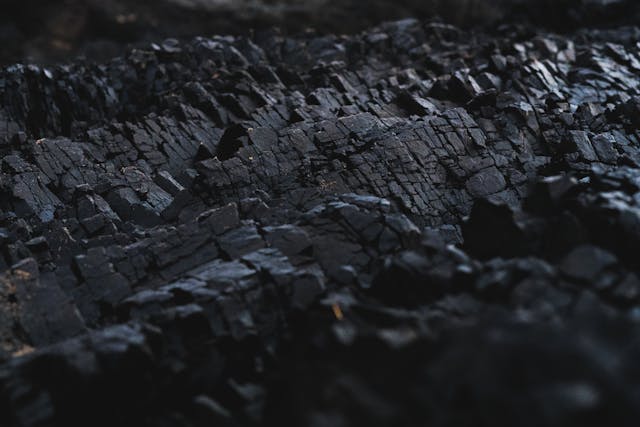
Activated carbon is a powerful adsorbent used across many industries for purification and separation. Its effectiveness comes from a vast network of pores that create an enormous internal surface area, allowing it to trap and remove contaminants from liquids and gases. While the fundamental principle of adsorption is the same, activated carbon comes in different forms, primarily powdered and granular. The choice between these two is not arbitrary; it depends on the specific industrial process, operational requirements, and economic considerations.
Understanding the key differences between powdered and granular activated carbon is crucial for designing an efficient and cost-effective purification system. This article will explore the unique characteristics, applications, advantages, and disadvantages of each type to help guide the selection process for various industrial applications.
What is Activated Carbon?
Before diving into the differences, let’s briefly touch on what activated carbon is. It’s a form of carbon processed to have small, low-volume pores that increase the surface area available for adsorption. A single gram of activated carbon can have a surface area in excess of 3,000 square meters. This immense surface area allows it to adsorb a wide range of organic and inorganic compounds from both liquid and gas phases.
The base materials for activated carbon include coal, coconut shells, wood, and peat. The activation process involves heating this material in the absence of air to create a carbon char, followed by an “activation” step using steam or chemicals to develop the internal pore structure. The final physical form—powder or granules—is determined during manufacturing.
Powdered Activated Carbon (PAC): Fast and Flexible
Powdered activated carbon (PAC) consists of fine particles, typically less than 0.18 mm in diameter (passing through an 80-mesh sieve). These fine particles provide a massive external surface area, which leads to rapid adsorption kinetics. PAC is generally added directly to the liquid being treated in a slurry form.
Characteristics of PAC
- Particle Size: Very fine, creating a dusty powder.
- Surface Area: High external surface area allows for quick interaction with contaminants.
- Adsorption Rate: Extremely fast due to the small particle size. Contaminants do not need to diffuse far into the carbon structure.
- Application Method: Typically used in a batch process or dosed continuously into a process stream. It is mixed with the liquid, allowed a certain contact time, and then removed.
How PAC is Used in Industrial Processes
PAC is often used for short-term or intermittent purification needs, or in situations where a rapid response to contaminant spikes is necessary. The standard process involves:
- Dosing: PAC is mixed with water to form a slurry, which is then injected into the liquid stream that requires treatment.
- Contact: The slurry is agitated within a contact tank to ensure the carbon particles are thoroughly dispersed and have sufficient time to adsorb the target pollutants. Contact times can range from a few minutes to over an hour, depending on the application.
- Separation: After the contact phase, the spent PAC must be separated from the treated liquid. This is commonly achieved through sedimentation, clarification, or filtration.
Advantages of Powdered Activated Carbon
- High Adsorption Rate: PAC works very quickly, making it ideal for processes with limited contact time.
- Flexibility: The dosage can be easily adjusted to handle fluctuations in contaminant levels. This is particularly useful for seasonal taste and odor issues in water treatment or for managing unexpected pollutant spikes in industrial wastewater.
- Lower Capital Costs: PAC systems require relatively simple equipment—a storage silo, a slurry tank, and a dosing pump. This often results in lower initial investment compared to granular systems.
- Effectiveness for Trace Contaminants: It is highly effective at removing a wide range of micropollutants, including pesticides, algae toxins, and emerging contaminants.
Disadvantages of Powdered Activated Carbon
- Separation Challenges: Removing the fine carbon particles after treatment can be difficult and may require additional clarification or filtration steps, increasing operational complexity.
- No Regeneration: PAC is almost always used on a single-pass basis. The spent carbon is disposed of, typically in a landfill or through incineration. This can lead to higher long-term operational costs and create solid waste disposal concerns.
- Potential for Dust: Being a fine powder, PAC can create dust issues during handling, requiring enclosed systems and personal protective equipment for operators.
Granular Activated Carbon (GAC): Durable and Regenerable
Granular activated carbon (GAC) consists of larger, more durable particles with a typical size range of 0.2 to 5 mm. Unlike PAC, GAC is used in fixed-bed adsorbers or filters where the liquid or gas passes through a static bed of carbon.
Characteristics of GAC
- Particle Size: Larger, irregularly shaped granules.
- Durability: High mechanical strength allows it to withstand the hydraulic pressure and backwashing cycles in a filter bed.
- Adsorption Rate: Slower than PAC. Contaminants must diffuse from the liquid into the macropores and then into the micropores of the granules, which takes more time.
- Application Method: Used in packed beds within vessels or filters for continuous flow-through treatment.
How GAC is Used in Industrial Processes
GAC is the workhorse for many long-term, continuous purification applications. The typical setup involves one or more large vessels (adsorbers) filled with GAC.
- Adsorption: The contaminated liquid or gas flows downward or upward through the carbon bed. As it passes through, contaminants are adsorbed onto the GAC particles.
- Exhaustion: Over time, the GAC becomes saturated with contaminants, starting from the inlet of the bed and moving progressively through it. This is known as the mass transfer zone. When this zone reaches the outlet, “breakthrough” occurs, and the treated fluid no longer meets the required purity standards.
- Regeneration or Replacement: Once exhausted, the spent GAC can either be replaced with fresh carbon or removed and thermally reactivated. Regeneration involves heating the carbon in a high-temperature furnace to destroy the adsorbed organics, restoring its adsorptive capacity.
Advantages of Granular Activated Carbon
- Regenerability: The ability to be thermally reactivated is a major advantage of GAC. This significantly lowers long-term operating costs and reduces the environmental impact associated with disposal.
- Ease of Use: GAC systems are simple to operate. Once installed, they provide continuous treatment with minimal operator intervention until the carbon is exhausted.
- No Separation Issues: Since GAC is contained within a vessel, there are no downstream separation steps required. The treated fluid exits the system clean and ready for the next process.
- Dual Function: In many water treatment applications, GAC filters serve a dual purpose, acting as both a filter for suspended solids and an adsorber for dissolved contaminants.
Disadvantages of Granular Activated Carbon
- Higher Capital Costs: The initial investment for GAC systems, which includes large pressure vessels, piping, and backwashing equipment, is generally higher than for PAC systems.
- Slower Adsorption Kinetics: GAC requires a longer contact time to be effective. This means larger vessels and a greater volume of carbon are needed to achieve the same removal efficiency as PAC in a given timeframe.
- Not Ideal for Spikes: GAC beds are designed for relatively stable contaminant loads. They are less effective at handling sudden, high-concentration spikes, as the mass transfer zone can move through the bed too quickly, leading to premature breakthrough.
Making the Right Choice for Your Process
The decision between PAC and GAC is a technical and economic one.
Choose PAC when:
- Treatment is intermittent or seasonal.
- You need to respond quickly to variable contaminant levels.
- Capital budget is the primary constraint.
- The volume of water to be treated is relatively low, making disposal costs manageable.
- The application is for polishing or removing trace amounts of specific contaminants on an as-needed basis.
Choose GAC when:
- Purification is a continuous, long-term requirement.
- Contaminant loads are relatively stable.
- Minimizing long-term operating costs and waste is a priority.
- High volumes of liquid or gas need to be treated.
- Simplicity of operation and minimal operator attention are desired.
In some cases, a hybrid approach using both PAC and GAC can provide the most robust solution. For example, a GAC system can handle the baseline contaminant load, while a PAC dosing system can be activated to manage periodic spikes or remove specific compounds that GAC does not adsorb as effectively. This combined strategy leverages the strengths of both forms of activated carbon to create a resilient and efficient purification system.