
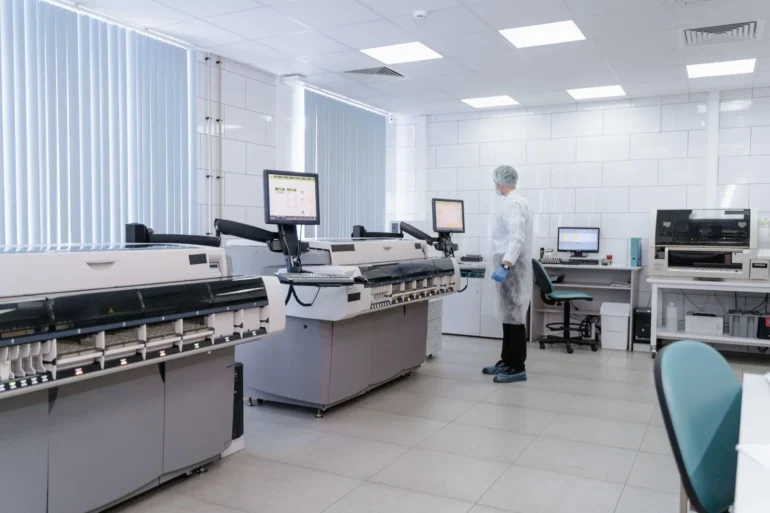
Photo: Tima Miroshnichenko
For decades, leadership in clinical research was largely defined by administrative oversight. A clinical research leader was someone who sat high above the daily operational floor, managing sponsor relations, reviewing retrospective quarterly performance reports, and ensuring regulatory compliance from behind a desk. Success was measured by high-level milestones, strategic oversight committees, and macro-level trial enrollment numbers.
If you observe the drug development landscape today, that distant, purely administrative style of leadership is rapidly becoming obsolete.
As early-phase clinical protocols grow increasingly complex—packed with delicate biostimulators, intricate peptide candidates, and rapid pharmacokinetic sampling windows—the gap between high-level strategy and floor-level execution has created significant vulnerabilities. When a trial protocol attempts to answer multiple exploratory questions at once, the primary risk is rarely a flaw in theoretical science. The real risk is operational friction on the clinic floor.
Today, a fundamental shift is occurring in how effective research leadership is defined. The most successful clinical research leaders are moving away from passive administration and returning to operational presence.
The Operational Reality of the Clinic Floor
To understand why leadership style matters so profoundly in early pharmacology, you have to look at what actually happens during a high-density clinical trial.
In a Phase I ascending dose or first-in-human study, the margin for error is razor-thin. Within a single four-minute window, a clinical nurse may need to verify volunteer identification, capture exact dosing timestamps, draw biological samples, and record vital signs. If that nurse is simultaneously required to navigate three clunky software portals, double-enter data onto paper charts, and track samples across fragmented vendor hand-offs, cognitive overload sets in.
When attention is divided, tiny operational slips happen:
- A pharmacokinetic blood draw gets recorded four minutes late, distorting early exposure curves.
- A biological sample sits at room temperature a minute too long while staff hunt for misplaced logging gear.
- A subtle physiological signal or baseline shift gets overlooked during a chaotic shift change.
These micro-slips are almost never caused by a lack of staff dedication or training. They are the natural, predictable result of operational friction.
A traditional administrative leader responds to these issues reactively, issuing corrective action plans, scheduling staff re-retraining, or adding more compliance checklists after the data has already been compromised. An operationally engaged leader acts proactively, looking at the floor workflow to remove the friction before human error ever occurs.
Zero-Distance Leadership and Physical Integration
True operational leadership is about creating an environment where high-science protocols can be executed with absolute simplicity and precision. This requires leaders to re-examine the physical infrastructure of clinical research.
For years, the standard industry model relied on fragmented vendor networks. A research site hosted the participants, a third-party courier transported frozen samples across state lines, and an offsite laboratory processed the bioanalysis days or weeks later. When an issue arose with a sample or an unexpected exposure curve appeared, resolving it required long email chains and multi-vendor conference calls while trial timelines stalled.
Modern clinical research leaders are rejecting this fragmented approach in favor of structural integration.
Leaders at AXIS Clinicals have centered their operational strategy on the concept of zero-distance integration. By placing expansive 200+ bed clinical facilities directly alongside in-house bioanalytical laboratories, the physical separation that usually creates trial lag is eliminated entirely.
When the clinical beds and the bioanalytical testing instruments operate under the exact same roof, leadership creates an immediate, live feedback loop. If a dose-escalation protocol requires real-time safety readouts before clearing the next cohort, the clinical investigator, the central monitor, and the bioanalytical scientist do not wait on courier manifests. They walk down the hall, review the raw data together, and make confident, data-backed decisions in real time.
This level of physical alignment protects the trial dataset from transit variables while keeping early-phase programs moving forward without unnecessary delays.
Bedside Technology as an Enabler of Focus
Operational leadership also dictates how technology is deployed inside the clinic. In recent years, theライフ sciences industry has been flooded with digital tools promising to revolutionize trials. Yet, many of these tools were designed without considering the human reality at the participant’s bedside, resulting in fragmented interfaces that added hours of administrative work to every shift.
Effective research leaders recognize that technology should simplify human effort, not complicate it.
Deploying direct, point-of-care eSource systems natively at the participant bedside transforms how data is captured:
- At-the-Bedside Entry: Clinicians record timestamps, dosing events, and vital signs natively with a single touch at the exact second of inception.
- Instant Validation Rules: System logic checks entries immediately, catching potential timing deviations or transcription errors before they enter the permanent record.
- Unbroken Human Focus: Removing manual paper re-entry and retrospective cleanups allows nurses to keep their focus squarely on participant safety and care.
When leaders prioritize intuitive bedside tools over complex, multi-portal software, they protect clinician attention. Lowering administrative fatigue directly correlates with cleaner data, higher staff retention, and safer participant experiences.
The Human Element in Modern Leadership
At its core, clinical research remains a deeply human endeavor. Behind every complex dataset, pharmacokinetic graph, and regulatory filing are human volunteers giving their time and clinical teams working tirelessly on the floor.
The modern clinical research leader understands that operational precision is ultimately an act of respect. It respects the safety of the volunteers, the hard work of the clinic staff, and the immense investment biopharma sponsors make in bringing life-changing molecules into human testing.
By replacing distant administrative oversight with active operational presence, eliminating vendor hand-offs, and simplifying bedside execution, research leaders are building a more resilient framework for drug development.
The future of clinical research will not be defined by keynotes, flashy algorithms, or passive oversight committees. It will be driven by operational leaders who understand the floor, respect the science, and build integrated systems that deliver pristine, unassailable data with complete scientific confidence.