
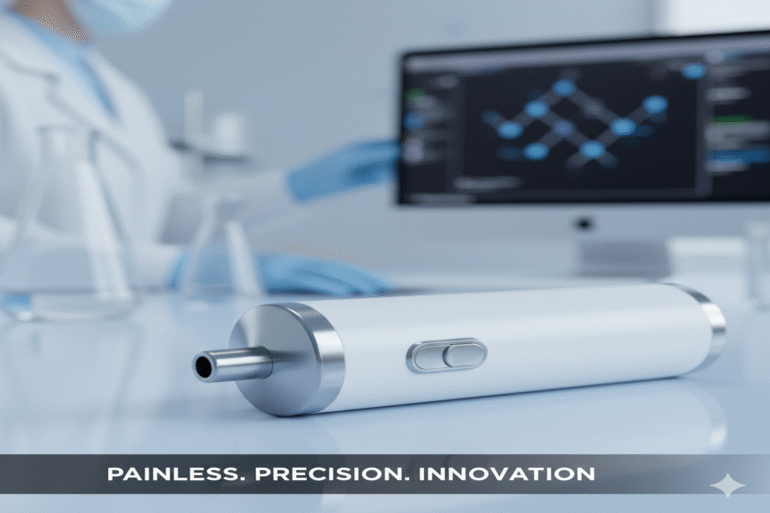
For centuries, the hypodermic needle has been the undisputed symbol of medical intervention. It’s a tool that has saved countless lives, yet for many, it evokes a primal fear—a combination of pain, anxiety, and dread known as trypanophobia. This fear has tangible consequences, from individuals skipping vital vaccinations to patients mismanaging chronic conditions like diabetes. But what if we could deliver life-saving medications without a single sharp point in sight?
The future of injections is here, and it’s silent, swift, and needle-free. This isn’t science fiction; it’s a rapidly advancing technology poised to redefine patient care across the globe. Needle-free injectors are emerging from the realms of niche applications to the forefront of mainstream medicine, promising a paradigm shift in how we administer drugs and vaccines.
How Does It Work? The Science Behind the Magic
The fundamental principle of a needle-free injector is to use force, rather than a physical puncture, to push a liquid medication through the skin. Imagine a high-pressure water jet cutting through steel; the needle-free injector operates on a similar, albeit much more refined and patient-friendly, scale.
Most devices work by creating a fine, high-velocity stream of the drug formulation. This is achieved through various mechanisms:
- Spring-Powered or Gas-Powered: These devices use a pre-compressed spring or a canister of compressed gas to create the sudden force needed to expel the medication. When activated, the plunger forces the liquid through a microscopic nozzle, creating a ultrafine stream that penetrates the skin in milliseconds.
- Laser-Powered: A more recent innovation uses a laser to create a tiny, controlled bubble of vapor in the drug chamber. The rapid expansion of this bubble acts as the piston, pushing the medication through the skin with incredible precision and minimal sensation.
- Electro-Mechanical: These systems use a small electric motor to generate the required pressure, offering programmable control over the speed and depth of delivery.
The result is a method that delivers the medication into the subcutaneous tissue or intramuscular layer without leaving a puncture wound. For the patient, the experience is often described as a slight pressure or a quick, sharp snap—a sensation that is significantly less painful and anxiety-inducing than a traditional needle.
A Multitude of Benefits: Beyond Just Comfort
The primary appeal of needle-free injectors is the elimination of needle phobia, but the advantages extend far beyond patient comfort. This technology addresses some of the most pressing challenges in modern healthcare.
- Enhanced Safety for Patients and Practitioners: Needlestick injuries are a significant occupational hazard for healthcare workers, exposing them to the risk of bloodborne pathogens like HIV and Hepatitis B and C. By eliminating the needle, this risk is virtually eradicated. Furthermore, it reduces the potential for cross-contamination and improper needle disposal, a major public health issue.
- Improved Medication Adherence: For patients with chronic conditions like diabetes who require daily injections, the burden of needles is real. The pain and hassle can lead to skipped doses and poor disease management. Needle-free options can dramatically improve the quality of life and adherence to treatment regimens, leading to better health outcomes.
- Potential for Self-Administration: The user-friendly design of many needle-free devices makes them ideal for at-home use. With simplified operation and no fear of self-injury with a needle, patients can confidently administer their own medications, increasing independence and reducing the frequency of clinic visits.
- Dose-Sparing and Enhanced Efficacy: Some studies suggest that needle-free delivery, particularly using jet injectors, can lead to a more robust immune response with vaccines. The high-pressure stream may stimulate immune cells in the skin more effectively than a traditional intramuscular injection. This could allow for “dose-sparing,” where a smaller volume of a vaccine elicits the same level of protection, a crucial advantage during pandemic scenarios.
The transformative potential of this technology is reflected in its explosive market growth. The Needle-Free Injector Market is expected to reach USD 43.54 billion by 2032, growing at a CAGR of 12.08% from 2025-2032. This staggering projection underscores the immense confidence and investment flowing into the sector, signaling a definitive shift away from traditional syringes.
Current Applications and the Road Ahead
Needle-free technology is already making a tangible impact. Its applications are diverse and expanding:
- Diabetes Care: Insulin delivery is one of the largest and most established markets for needle-free devices, offering a welcome alternative to multiple daily injections.
- Vaccination: From mass influenza campaigns to pediatric immunization, needle-free systems are being deployed to increase uptake and streamline the process.
- Dermatology and Aesthetics: The precise delivery of fillers, local anesthetics, and other cosmetic treatments is a perfect fit for needle-free technology.
- Emergency Medicine: The ability to administer drugs quickly and safely in high-stress situations, without fumbling with needle caps, is a significant advantage.
However, the path forward is not without its challenges. The current cost of devices is higher than that of traditional needles, which can be a barrier to widespread adoption in resource-limited settings. There are also ongoing developments to ensure consistent and reliable delivery across different skin types and thicknesses, and to expand the portfolio of drugs that can be effectively formulated for needle-free delivery.
A Painless Puncture in Medical History
The needle-free injector represents more than just a technological upgrade; it symbolizes a more humane, efficient, and safe approach to medicine. By addressing the deep-seated fear of needles, it has the power to unlock higher vaccination rates, better management of chronic diseases, and a safer environment for healthcare heroes.
As research continues and costs decrease, we can expect to see these devices become as commonplace as the stethoscope. The silent shot is not merely a novelty; it is the sound of progress, heralding a future where receiving medical treatment is defined not by fear, but by comfort and care. The age of the needle is drawing to a close, and a brighter, less painful chapter in healthcare is beginning.