
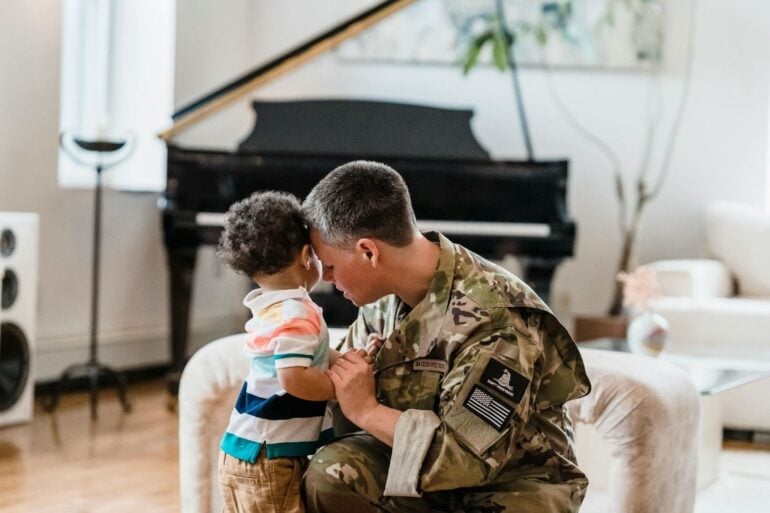
As global tensions rise and conflict in the Middle East continues to unfold, the focus of military readiness often centers on strategy, equipment, and deployment timelines. Yet behind every deployment is a network of families navigating a different kind of uncertainty—one that is less visible, but equally consequential.
For the roughly 1.6 million children in the United States with an active-duty parent, the realities of military life are not defined by geopolitics, but by disruption. Changes in routine, prolonged separations, and the emotional toll of uncertainty are compounded by a more practical challenge: maintaining consistent access to healthcare.
The Hidden Impact of Deployment on Family Healthcare
Research from organizations such as the RAND Corporation has consistently shown that military families face disruptions in continuity of care, particularly during relocations and deployments.
They introduce sudden and often unpredictable changes to family life. Community changes, shifts in caregiving responsibilities, and gaps in continuity of care can disrupt everything from routine pediatric visits to ongoing treatments.
For children, these disruptions can be especially significant. Transitions between providers may delay diagnoses or interrupt care plans, while the absence of one parent can place additional strain on the family’s ability to manage medical needs. Mental health support, already a critical component of care for military families, can become harder to access precisely when it is needed most.
These challenges are not new, but they become more acute during periods of active conflict, when deployments may increase and timelines become less predictable.
Why War Readiness Must Include Medical Readiness
Military preparedness is often measured in terms of operational capability—troop strength, logistics, and technological advantage. However, this definition can overlook a critical dimension: the readiness of the systems that support service members and their families.
Joanne M. Frederick, CEO of Government Market Strategies, emphasizes that being prepared for conflict extends beyond the battlefield. It includes ensuring that healthcare systems are equipped to support families before, during, and after deployment.
This means more than maintaining facilities. It requires access to qualified clinicians, availability of specialized care, and the ability to deliver consistent services across different locations. Without these elements, the burden of navigating healthcare falls increasingly on families themselves.
Where Military Families Turn for Care During Conflict
Military families often rely on a combination of military treatment facilities and civilian healthcare providers. While this hybrid system can offer flexibility, it can also create fragmentation.
Access to care may vary significantly depending on location. Families stationed in urban areas may have more provider options, while those in rural regions can face limited availability, longer travel distances, and fewer specialists. During times of heightened military activity, these disparities can become more pronounced.
The question of where families go for care is not always straightforward. It depends on network participation, provider availability, and the structure of reimbursement systems that influence whether providers can sustainably serve military populations.
A System Under Strain Meets Rising Demand
Even before periods of conflict, parts of the healthcare system serving military families have been operating under pressure. Hospitals that care for service members, veterans, and their dependents often manage tight financial margins while delivering complex and specialized care.
These constraints can limit flexibility at the very moment when demand increases. As deployments rise and more families rely on available services, existing vulnerabilities in the system become more visible.
Frederick notes that structural factors, including reimbursement design, play a role in shaping provider participation and financial stability. When these pressures converge, hospitals and providers may be forced to make difficult decisions about staffing, services, and capacity.
For families, this can translate into delayed care, reduced access, or the need to travel farther for treatment—adding logistical and emotional strain to an already challenging situation.
What Supporting Military Families Actually Requires
Addressing these challenges requires a broader understanding of what support for military families truly entails. It is not limited to moments of crisis, but extends to the systems that sustain families over time.
Continuity of care, predictable access to providers, and coordination between military and civilian healthcare systems are essential components. So is the ability to anticipate increased demand during periods of conflict, rather than reacting to it after gaps emerge.
Supporting military families also means recognizing that healthcare access is not a peripheral issue. It is central to family stability, and by extension, to the overall readiness of the force.
Military readiness is often framed in terms of strength and strategy. But readiness is also measured in resilience—in the systems that support those who serve, and in the stability of the families who stand behind them.
As conflict continues abroad, the question is not only whether the military is prepared to respond, but whether the systems supporting its families are prepared to keep up.