
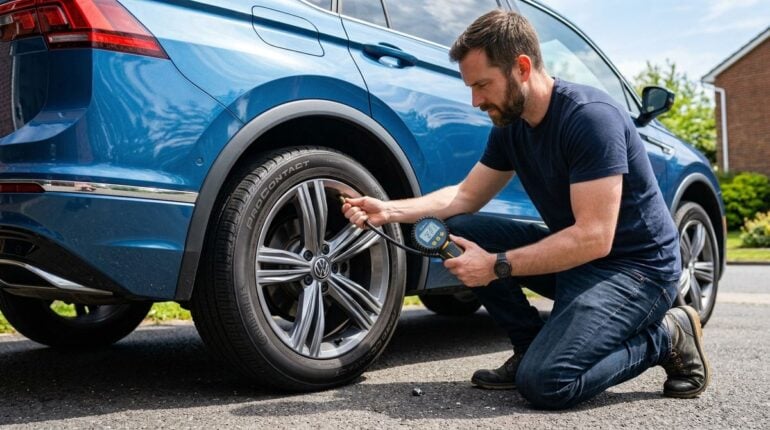
Tire pressure is one of the simplest things a family can check before a long journey, yet it is often forgotten during busy preparations. Tires that are underinflated or overinflated can affect how a car handles, how it brakes, and how much fuel it uses. Many drivers also notice that pressure changes with temperature, which means a check done on a warm afternoon may differ from one done on a cold morning. This checklist explains how a parent and a teenager can check tire pressure together, understand what the numbers mean, and build a habit that makes road trips safer and less stressful.
Finding the Correct Pressure
The correct tire pressure for a vehicle is usually listed in the owner’s manual and often on a sticker inside the driver’s door frame or the fuel flap. This number is different from the maximum pressure printed on the tire sidewall. The sidewall figure is the highest the tire can safely hold, not the figure the car needs. Show the teen both numbers and explain the difference, because confusion here is a common source of mistakes.
Make sure the teen reads the figure for the correct load condition if the sticker lists more than one. Some vehicles give different values for light loads and heavy loads, and a family planning a trip with luggage may need the higher setting. A parent can check the manual together to confirm the right figures before the check begins.
Checking Tires When They Are Cold
Pressure is best checked when the tires are cold, which means the car has been parked for a while and has not been driven far. Driving warms the tires and raises the pressure, so a reading taken straight after a long drive may be misleading. If a check must be done after driving, allow the car to rest before measuring. Readers may also want to visit recknews.com.
Use a reliable tire gauge, either a simple pen type or a digital model. Press it firmly onto the valve so that air does not escape, and read the number carefully. Write the result down, and repeat the reading if it seems unusual. A teen who learns to check carefully builds a habit that is useful for life.
Use this checklist during the family check:
1. Locate the recommended pressure in the manual or on the door sticker.
2. Wait until the tires are cold before measuring.
3. Remove each valve cap and press the gauge firmly on the valve.
4. Add or release air in small amounts until the target is reached.
5. Replace the valve caps and check the spare tire as well.
Adding Air Safely
Filling a tire is simple, but it requires attention. Add air in small amounts, then check the pressure again rather than filling in one large burst. Many service stations have air machines that are easy to use, although they can be fast and unforgiving. A teen should know how to read the gauge on the machine and how to stop the flow once the target number appears. Never fill a tire beyond the sidewall maximum, and avoid leaning over the valve during inflation.
If a tire loses air quickly or the pressure drops repeatedly, there may be a leak or a damaged valve. In that case, a qualified mechanic should inspect the tire before the trip. Driving on a tire that is seriously underinflated can cause heat build up and handling problems, so it is better to seek help early.
Looking at the Tread and Tire Condition
Pressure is only one part of tire safety. While checking each tire, the family can also look at the tread and the sidewalls for cracks, bulges, or embedded objects. A simple coin test can show whether the tread is becoming worn, and a parent can demonstrate how to use it. If the tread appears very low or the tire looks damaged, the tire should be assessed by a professional before a long journey.
Consider keeping a small kit in the car that includes a gauge, a reliable pump or a jump starter, and a copy of the vehicle manual. These items are useful for emergencies and encourage the teen to think ahead. You can also visit lpqueen.com for more reading.
Making the Check a Routine
Tire pressure should be checked regularly, not only before big trips. For a related read on this site, see Mistakes to Avoid When Hiring a Vehicle Transporter. Choose a monthly routine, perhaps on the first weekend of each month, and let the teen take the lead. Recording the readings in a notebook helps spot slow leaks and seasonal changes. Over time, the teen will become confident in carrying out the check and in explaining the results to others.
A pre trip check is a small investment of time that can make a long journey safer and more predictable. When a parent and teen complete it together, they share responsibility for the vehicle and build habits that will matter every time they drive.